
Listen in on my conversation with company artist Kethryn Avery as we discuss her role in Label: Beauty and how she draws on ideas about being made in the image of God as well as experience from her own faith journey to portray her character.
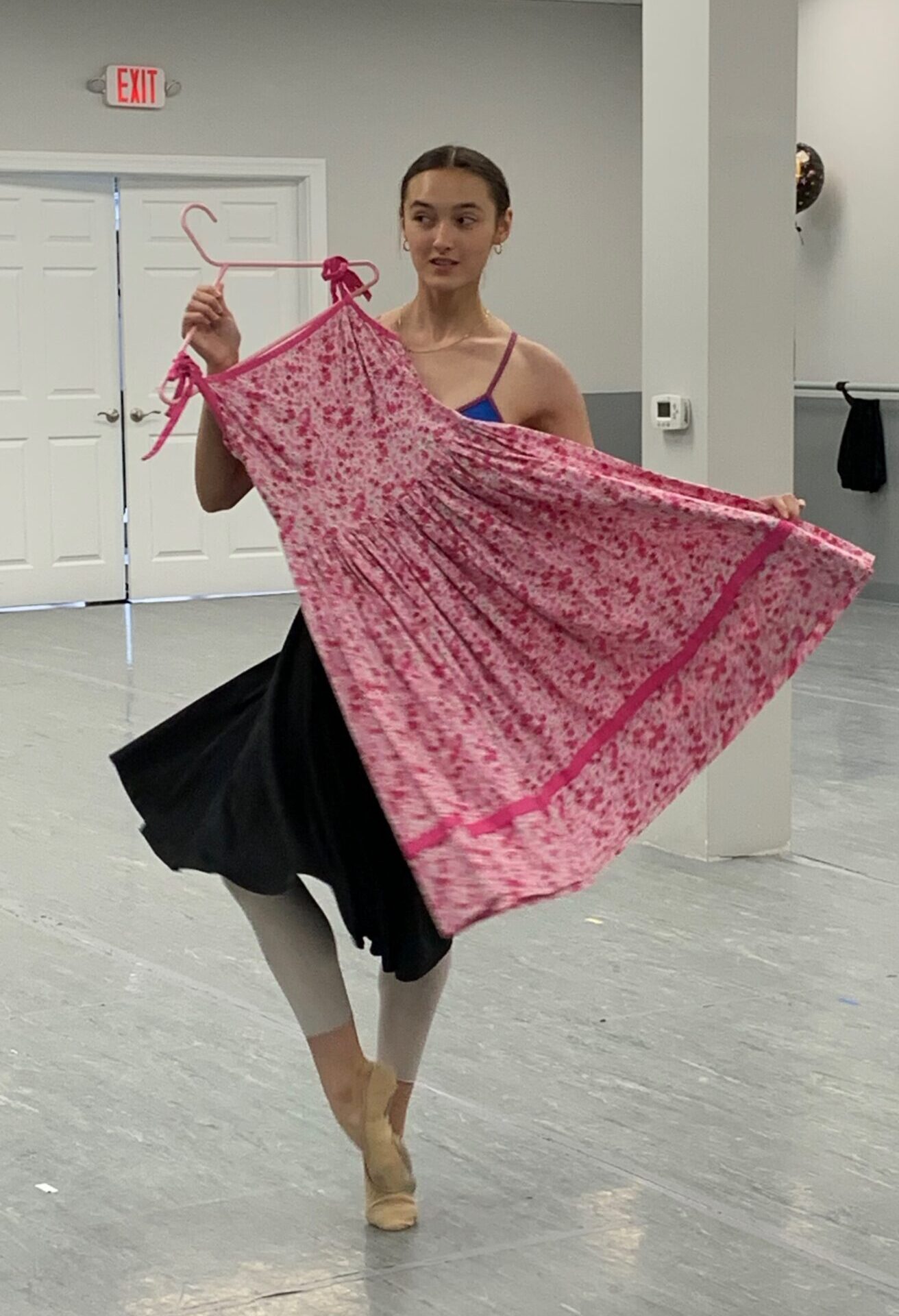 Kaya: Thanks for talking with me today, Kethryn! The character you’re dancing in Label: Beauty is Loretta Mayfair. For the sake of our audience and framing our conversation, I’ll read Melody’s description of your character: “As the up-and-coming model to watch, Loretta is completely self-absorbed and believes the world revolves around her. She views everyone else as beneath her and not worth her time. Every outfit she might be modeling, she scrutinizes and finds the tiniest flaw, making it not good enough for her. Loretta treats others with no respect and is completely unaware of how her actions impact others.”
When you first started learning your role for Label: Beauty, you told me you weren’t sure how to make an antagonist like Loretta a God-honoring character. How have you come to think about Loretta’s motivations and behaviors as contributing to the story’s overall message that glorifies God?
Kethryn: A helpful thing for me to give Loretta more grace is to think of her not as inherently evil but as someone who doesn’t understand the world as a place for many people. She understands that she is beautiful, that she–not by God, but by something–was given favorable circumstances, was given the opportunity to be a model, to be very successful at a young age, and that she was given beauty as well. I think that she would accept that and relish in it. Where the problem comes in is that she doesn’t understand that other people have a life of their own. It’s like when you’re in elementary school and you still think of life like, “I’m the main character in TV show and everyone else is just here.”
Kaya: Loretta’s level of maturity in understanding who she is with respect to other people is not like a wizened sage, by any stretch. It’s also fair to say that everybody comes to that maturity at a different point in life. A lot of us are still learning that!
Kethryn: Another reason why it’s helpful is I can relate to it a little bit. As someone who wasn’t raised Christian, who didn’t have the thought that other people had feelings and opinions that matter, I can use those feelings and put them into Loretta. Not that I was anywhere near as ignorant as she is, but it’s easy to think, “Maybe people do have their own opinions and maybe people are living their own lives, but that’s inconsequential to me.” So it’s not that you don’t care for other human beings…it’s just that you don’t care.
Kaya: It might not occur to you if you’re focused on your own life where you’re the center of the story.
Kethryn: I feel like everyone struggles with that, too. Even Christians can think, “I understand that other people have their own problems, their own relationship with God, and I understand that they’re good people, but I don’t need to know everything about their lives, and if I don’t need to know everything about their lives, then it’s easy for me to forget that they’re struggling too.”
Kaya: That adds a lot of depth to what might look on-stage like a flat antagonist. You see Loretta on a development arc even if it doesn’t get completed in this story, and you recognize where she is as something that you might have experienced at an earlier point in your own journey.
Kethryn: It does make sense to base the character on myself a little bit because before I was Christian, I definitely thought I was the bee’s knees. I understood that I was beautiful. A lot of dancers have to think of themselves as at least a little bit beautiful; otherwise you wouldn’t go into the studio and look at yourself in the mirror all day and scrutinize everything, if you didn’t think at least some of it was worth improving upon. It’s easy to connect with that mindset.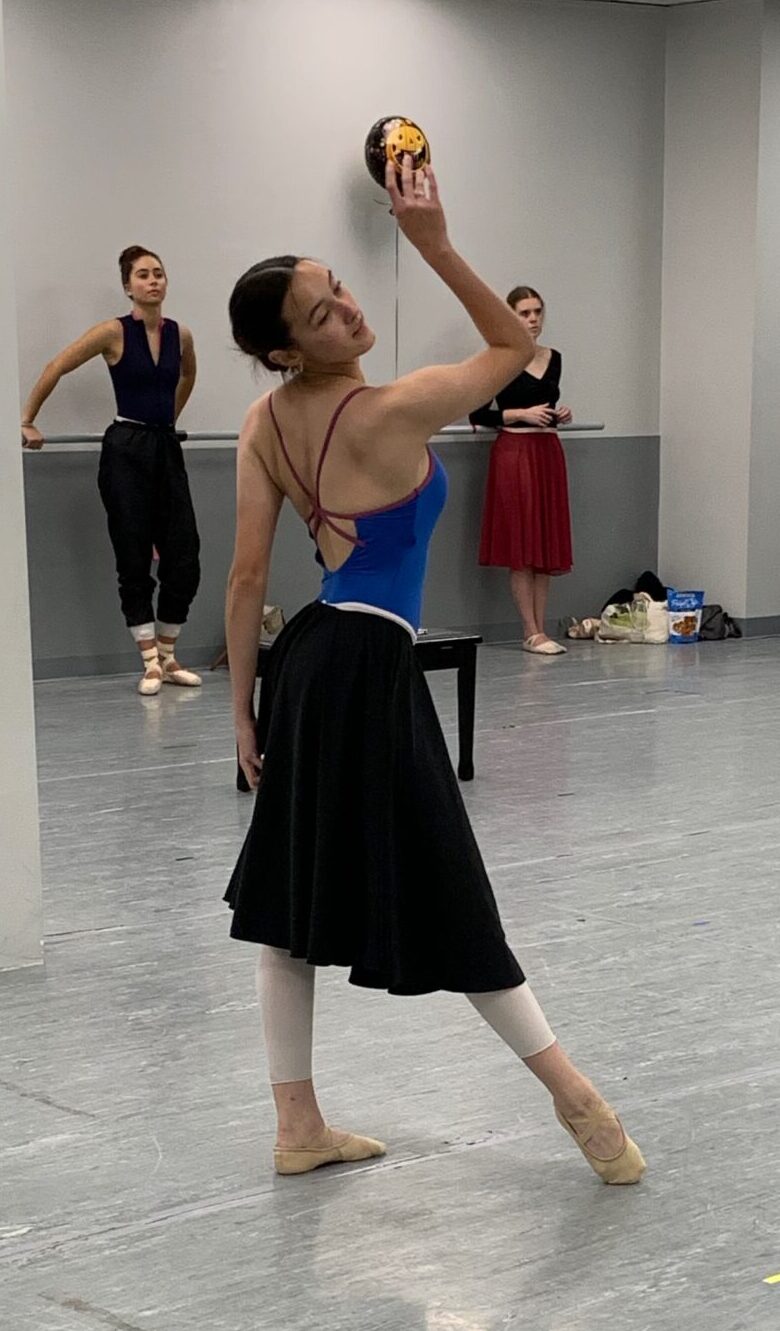
Then as that mindset expands to other people, you can still think of them as beautiful, good people, it’s just that you don’t care what they do. You don’t think they affect your life, and you don’t think you affect theirs. But with all that in mind, I don’t see Loretta as an evil character. I don’t see her as mean, I just see her as worried about herself. Not malicious, just having a narrow mindset.
Kaya: You and I had a conversation about the poetic structure of Psalm 8 and the human’s sense of self that realizes, “I’m made for a grand purpose in God’s creation,” and how the poem puts a boundary around that by praising God at the beginning and the end. You mentioned that Loretta’s sense of self lacks that boundary since she doesn’t think of herself in relation to God, so we talked about that sense of unboundedness characterizing Loretta’s movement. Could you talk about how you’re drawing out this idea in Loretta’s choreography and what nuance that gives to her character through her movement?
Kethryn: Loretta understands that she’s a wonderful creation; she just doesn’t understand that she’s God’s wonderful creation. Her movements reflect that because she is very graceful–not being Christian doesn’t make you un-talented or un-beautiful or un-graceful, so she’s very elegant. Her unboundedness is expressed by taking her movements to the point of perfection and then just pushing them a little bit beyond that, giving them a little bit more breath, a little bit more uncontrolledness in some of them–taking something simple and giving it a little bit more than it should have.
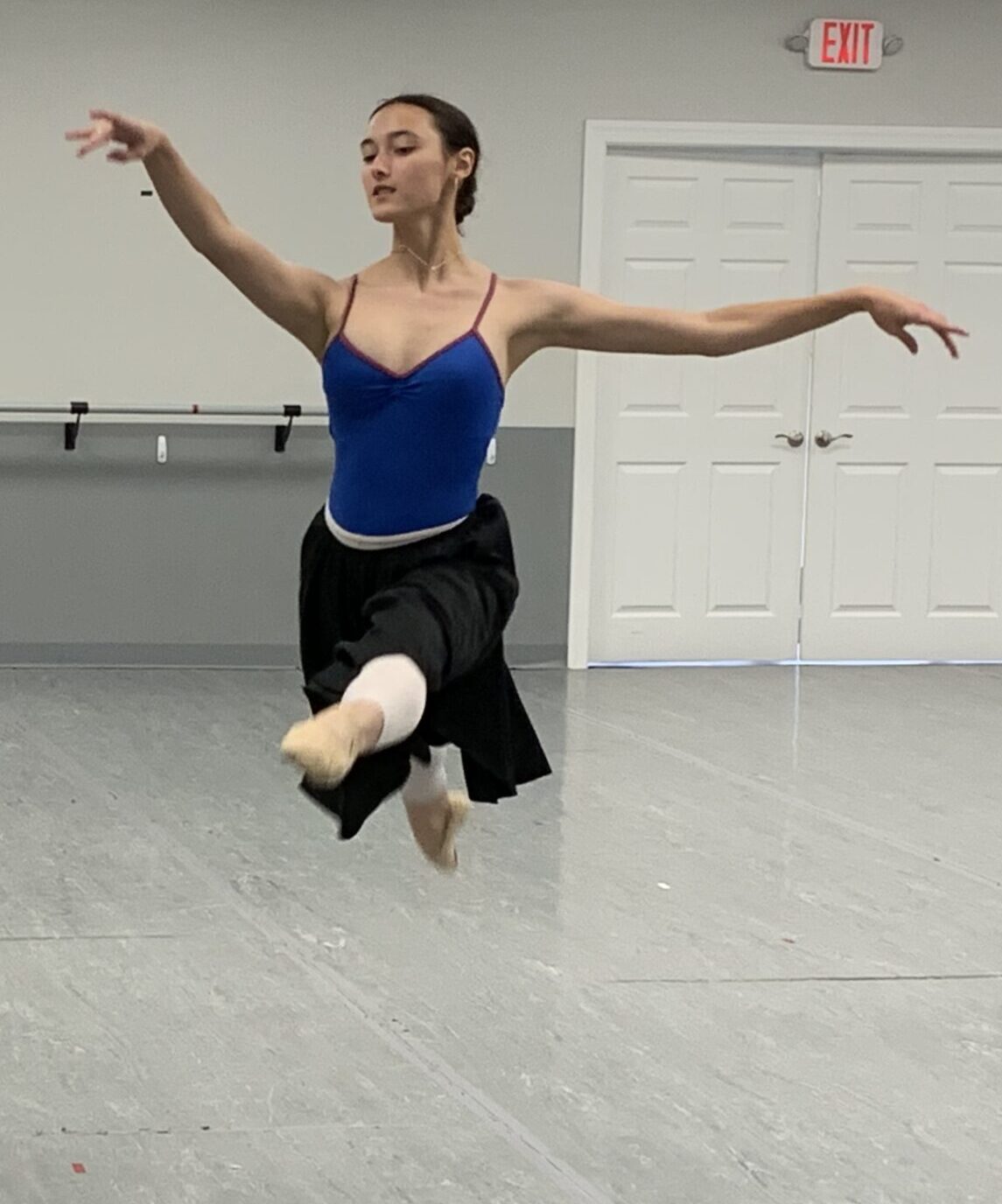 Another way to interpret it is taking things only to exact perfection. It could be that Loretta wants to be so perfect that she takes everything to exactly where it needs to be but doesn’t take it further. Any good extra that we have, we can credit to God, so Loretta might have the perfection down, but there’s no abundance of life in it.
Kaya: So you have two ideas to play with that you can contrast. It’ll be interesting to see which one you bring out in different moments, and that’ll be something that the audience can look for. What is one thing you hope the audience will learn from your character when they see Label: Beauty?
Kethryn: That’s a difficult one. We’ve talked about what I don’t want them to take from it! Especially for young girls, I don’t want them to see that Loretta is gorgeous and she does get everything she wants and think that they can receive that by behaving as she does. I hope that people can relate it to their own lives and think, “Am I treating others this way?” No one wants to be an antagonist.
If God writing a story was an analogy for life, I think people should take away that they should not presume to be the main character. We should think that God is the main character and the author. People should not think that because of the gifts they are given that they are above everyone else, because in the long run, who are any of us but sinners? Who are any of us but God’s?
A happier thing that I would want people to take away from it is that there’s nothing wrong with thinking that you’re beautiful. It’s hard with Loretta because she’s a beautiful bad character, but there’s nothing wrong with thinking you’re beautiful or with seeing beauty, and there’s nothing wrong with wanting things to go the way you hope they do. The wrongness comes in when you think that you are above other people because of that thought process, or whenever you put down others for not giving you your way.
Kaya: With that distinction, you’re drawing out where Loretta is different from the other characters in the story. All the characters are interested in beauty, and that’s never faulted in the story. Striving for excellence, self-expression–those are positive things. What makes Loretta the antagonist is that she lacks care for other people in the way she engages those things.
Kethryn: I wouldn’t want people to think that because you think you’re pretty you’re the bad guy! Everyone should think they’re pretty. Everyone should think they’re beautiful because once again, who are any of us but God’s?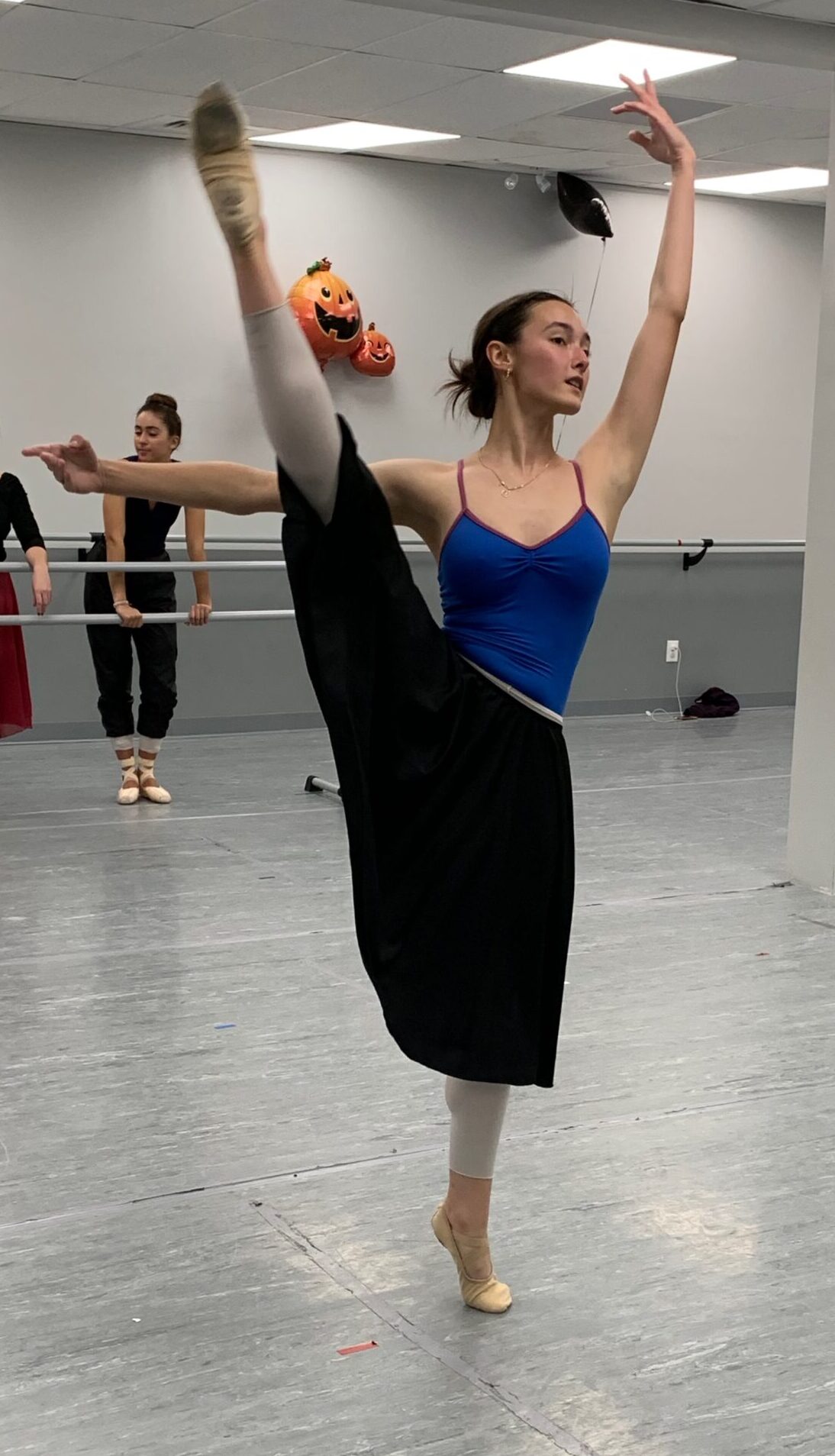
Kaya: It’s interesting that you said in God’s eyes we’re all sinners but at the same time, in God’s eyes we’re all beautiful.
Kethryn: It’s like a parent’s love for a child. Every day, we all fall short somehow, whether by thinking on lust, being jealous of other people, being too prideful–whatever our issue is on that day, it’s a sin, and God knows that, but God loves us anyway.
Kaya: That connects to the big-picture theme of the ballet, that we can rest secure in God and our belonging to God’s family with God as our father, because God’s love for us is not dependent on how perfect we are.
Kethryn: In the end, everyone’s going to be on the same level. In the end, we’re all God’s people, and we’re going to live sin-free for the first time, without being tempted to think, “I’m better than this person.”
Kethryn is a second soloist with Glorify Dance Theatre. Get to know her more by reading her bio!

