
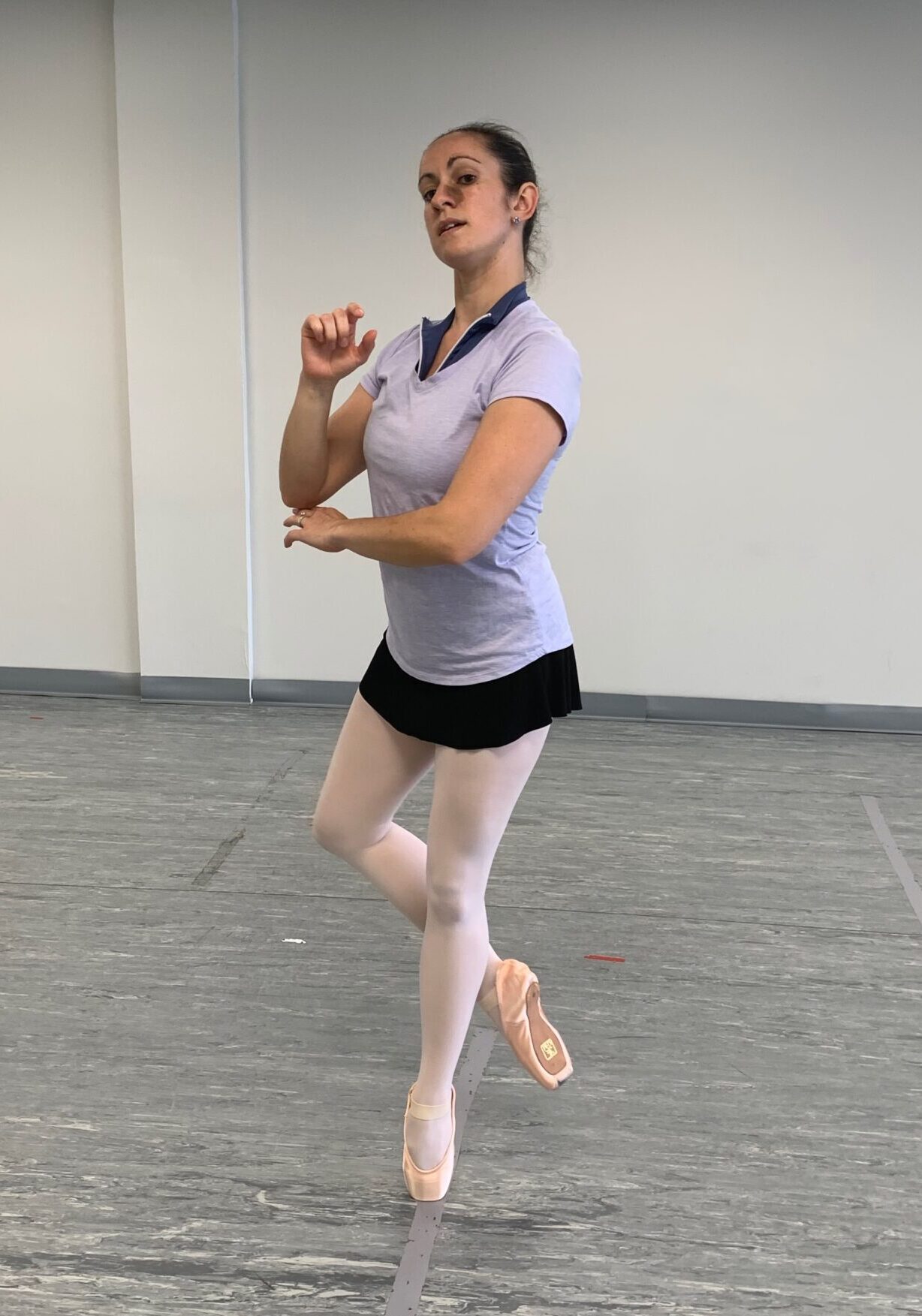
 Listen in on my conversation with company artist Hannah Snyder as we discuss her role in Label: Beauty and how her character development and dancing draw on Scripture about the good shepherd.
Kaya: Thanks so much for talking with me today, Hannah! Melody has written your character’s description as follows: “The penultimate fashion designer of the decade, Gloria Jones finds her best inspiration from living in Smalltown USA and brings in models to show off her latest designs. Who the model is doesn’t matter to Gloria, only how they make her clothes look. She’s learned to treat other people with an amount of respect as it’s the easiest way to make them do whatever she wants them to, but her level of care extends only to the length it needs for her to get her own way.” How would you describe your character’s backstory? What motivates Gloria to design clothes and to hire one model or another for her photo shoots?
Hannah: [Gloria and her sister were raised by an aunt who was] really strict and didn’t care about them too much, as long as they stayed out of her way. Gloria found fashion as an outlet, and it drove her to pursue her dreams and pursue her career. She didn’t really have any time for a man in her life or friends of any kind. She just wanted to keep climbing the ladder.
Kaya: It sounds like Gloria is really motivated to achieve in her industry because she’s found a skill that she’s good at. She wants to get better and better and be known as the ultimate fashion designer someday. How do Gloria’s motivations influence the way she treats her fashion models and her employees?
Hannah: She’ll do anything to get to the top, so she doesn’t care what people are feeling or how this affects anybody else, as long as it’ll help her to achieve her goals.
Kaya: You and I have talked about how Gloria could represent one of the “bad shepherds” described in Ezekiel 34 since she’s in a position of power as an employer and as a famous fashion designer. Can you tell our audience about a scene in Label: Beauty that shows how Gloria abuses her power and the effect it has on the “flock” she’s responsible for?
Hannah: It definitely affects them because she treats them poorly, gives them an unhealthy work environment, and belittles them. It’s harmful to their person because she’s not caring about them at all. She’s only thinking about her designs and people praising her for them.
Kaya: Part of what’s really complex about Gloria’s character is that she’s motivated by something good. It’s good to create new things to contribute to people’s quality of life, and their delight in things that we have to do. But it’s because of her laser-focus on that, and the fact that she has the latitude to exert influence over other people but doesn’t prioritize those people as much as she prioritizes her goals, that she abuses her power to get to her goals.
Hannah: Yeah, she starts to lose sight of anything else. There is a scene with Virginia [the first model Gloria hires] where she starts to mask her face. All she wants is her design to be the focus, and she positions Virginia into a pose that doesn’t show off her face at all and disguises who she is so that you can’t see her beauty. You can only see the beauty of the hat that Gloria’s putting on her and the dress that Gloria has made.
Kaya: That does give a really clear image. What about the scenes where you’re dancing as Gloria? What movement qualities do you use to convey Gloria’s self-serving attitude?
Hannah: Very precise movements. She doesn’t want to be seen as someone who’s weak, so she’s very proud; her facial expressions are always proud. She hardly ever finds joy in things.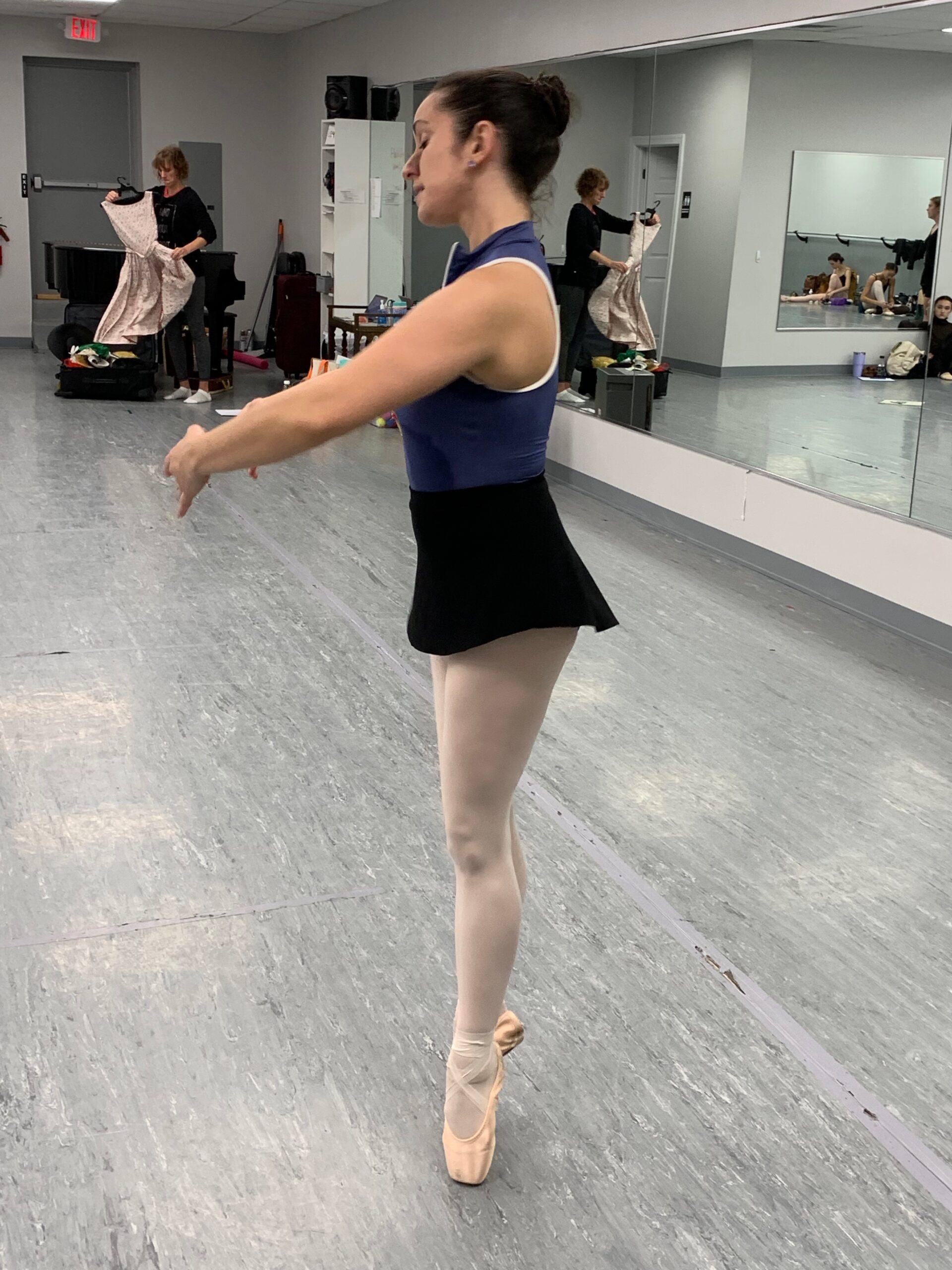
Kaya: That adds an interesting dimension: not only is it harmful to the people around her whom she’s just using for her own ends, but it’s also not life-giving for her when she’s putting on this facade of power. It ends up draining her as well as the people she employs.
Without giving away too much of the ending, the events of the story might prompt Gloria to rethink some of her motivations and values. Do you remember anything from our Bible study on Ezekiel 34 that offers a paradigm for how Gloria might treat her employees in a Label: Beauty sequel where Gloria’s self-examination leads to visible transformation?
Hannah: Ezekiel talks about the good shepherd and a bad shepherd, and [in John 10 Jesus talks] about how the sheep know the shepherd’s voice. Gloria’s voice, or her movement in ballet, is always telling someone what to do and demanding her own way, and she doesn’t want anyone else’s input. If she were to change her character, it would be to sometimes have her ideas changed, or to soften, and also to show off the beauty of her models with the things she’d like them to wear, and also have something that suits that particular model instead of making them cater to the design that she’s made.
Kaya: I really like the way you’re reimagining the transformed Gloria. When I was watching you rehearse today and seeing parts where you and Virginia and Loretta are dancing in a trio, I noticed that you three are like the fashion team, but now that you say that I realize, you don’t really operate as a team! There’s so much conflict in the story with everyone trying to get their own way. I love the picture you just painted where, in an alternate-Label: Beauty universe, they could work together as a team and ultimately create something more complex, more beautiful, and more interconnected.
Hannah: Gloria’s a very lonely person. The only people she has around her in her daily life are people that she tells what to do. She doesn’t find much joy being around people because she just uses them, so maybe in a sequel she would have more relationship building. She would have some kind of outlet other than just her goal of fashion design. She’s trying to prove that she can do things on her own. She doesn’t really need anybody, so she’s lonely.
Kaya: That’s something else we talked about. When we read John 20 yesterday, we talked about Jesus taking the time to notice Mary weeping at the tomb, and how Jesus as the good shepherd is the shepherd who calls his sheep by name–you mentioned that–and when he calls Mary by name, and she calls him “my teacher,” and how that evokes this whole relational complex showing that Jesus’s way of being in the world is in relationship with everyone, with all of his disciples. That’s obviously a contrast to a lonely Gloria.
Hannah: And also life without God, without following that good shepherd. You don’t have security. You have to find it in yourself, and you’re finding it in the thing that you think you’re producing.
Kaya: Right, and that’s another thing we talked about today with Psalm 1, that the right way is meditating on God’s word day and night, planted by that stream of water, and that’s what feeds and nourishes. If Gloria doesn’t have a relationship with God, then she’s not getting that inflow of relational energy that she can then pour out into relationships with other people.
So what is Gloria’s relationship with God like? Does she have a relationship with God?
Hannah: I would say that she doesn’t have a relationship with God. She thinks God is fine for church-goers to believe in, but when it comes to her, religion gets in the way of her achieving her goals. It gets in the way of time that she could have a fashion show…it’s not a priority to her.
Kaya: And that goes with the rest of her story, her motivations and how she treats people.
In your life off-stage as Hannah Snyder, what kind of situations do you find yourself in where you have to “shepherd” a “flock?”
Hannah: Sometimes even in the company, I feel like I need to be somewhat of an example, if it’s spiritually or having danced a long time, bringing that experience to the other girls, especially the younger girls like the apprentices and the Preparatory Company, showing them dance in a Christian setting instead of having only secular companies to be a part of. This was something I was passionate about, not for myself so much as just having it in the community. Being one of the pioneers in this dance company was something I was passionate about so that other dancers could come and take my place and carry the torch–allowing God to have his way instead of me wanting to be a professional dancer and having that glory on myself, but wanting God to be glorified in my dancing. 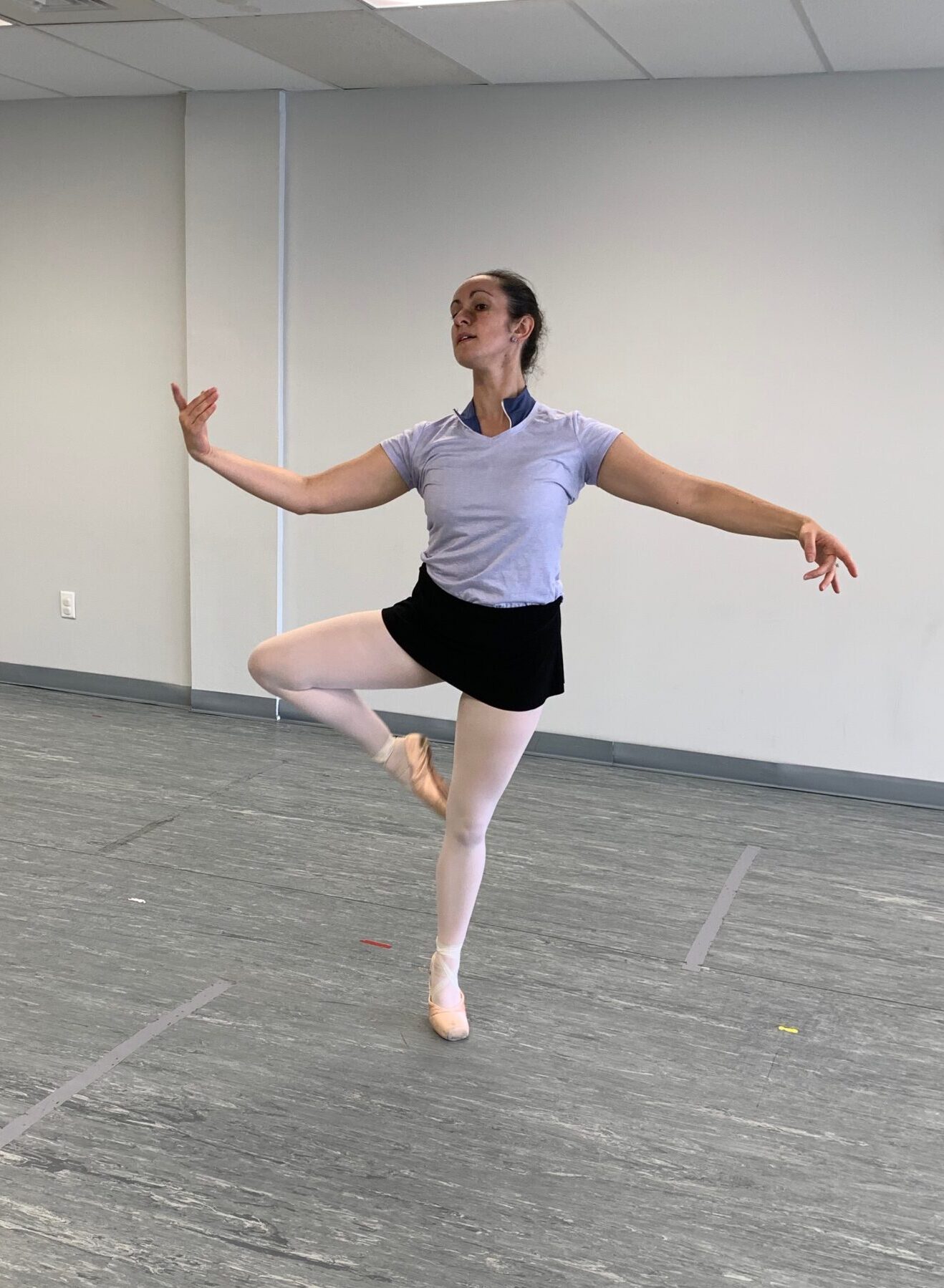
When I was younger I wanted to pursue dance, and God didn’t allow that to happen in a time when I felt like I was at my peak performance. Then God was shaping me and showing me that this was when he wanted me to dance, and this was the reason. God has been reshaping my priorities, and then I can share that with other company members.
Kaya: That relates to all the contrasts we’ve drawn between the good shepherd and the bad shepherds, who are taking the flock and consuming it. You’re saying, “It’s not for me, but it’s to glorify God,” and that gives you this awareness of who the other people in the company are, who’s impressionable, and the impact that you have on them.
Kaya: Is there anything else you’d add about how your relationship with God influences the way you act in those situations? How has God shown you the kind of shepherd God is to instruct you in how to lead responsibly?
Hannah: Sometimes giving me responsibility over people has shown me how hard it is and how God is so much better than I could ever be. Any time I teach, I might have come into it thinking, “I’m a good teacher, I can help these kids to get where they need to go,” but those kids have their own will inside them, and I can’t tell them exactly how to move or how to dance. God allows me to make my own choices, but he also is able to redirect things to help me get to where I need to be. Like a shepherd with a flock, sometimes a sheep runs away, so he’ll leave the rest to go find them.
It’s really cool to see how God has provided for me. Providing the opportunity to dance with GPA has been a dream come true, and there are a lot of hard moments where I’m wondering, “Why am I here? What do I have to offer?” But God keeps providing finances for the company, allowing it to grow, providing other dancers, and allowing me to be inspired by that so that I can continue to go, so I’m not burned out myself. I see other dancers coming along, and I see God showing me the vision that Melody had a long time ago, and now it’s coming. It’s really exciting!
Kaya: It’s so beautiful how you see the good that God has for you as tied up in the good that God has for this company and for the other dancers and for everyone who’s part of making art with Glorify. You’re not like Gloria the fashion designer who has her one goal, and it’s all hers. You are part of this beautiful community, and your good is tied up in the good of the whole flock.
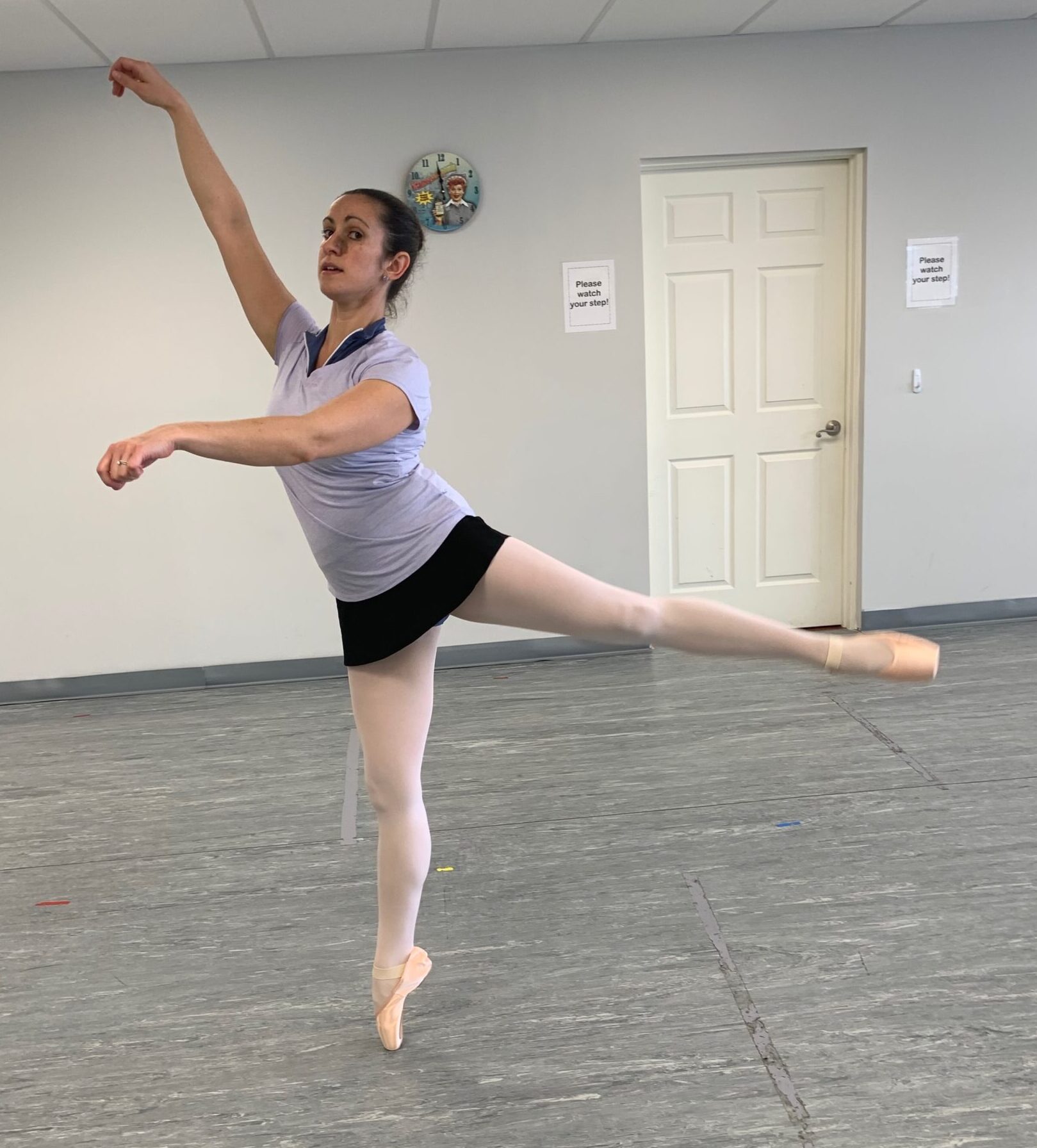 Is there anything else you want to be sure to share with our audience?
Hannah: I’m happy to be able to do this ballet! It’s a grace moment, because before covid, we were just about set, and it was about two weeks before the performance that we were going to put it all out there for everyone to see. It’s cool that God has allowed us that time to do other things and now has brought this dream back. It’s cool to be part of it personally instead of just making the groundwork and seeing it on stage; I actually get to be part of it still.
Hannah is a first soloist with Glorify Dance Theatre. Get to know her more by reading her bio!

