
Listen in on my conversation with Emily Bronkema, first soloist with Glorify Dance Theatre, as she shares about her reading of Ruth and her personal testimony in connection with her character in our upcoming ballet Label: Beauty.
Kaya: Thanks for talking with me today, Emily. We’ll be talking about your character in Label: Beauty, Virginia, whom Melody describes as follows: “She is a well known model who is in all sorts of magazines and comes to town for a fashion shoot. While she is a nice person who will gladly sign an autograph, Virginia does not understand what it means to live for anything except modeling. Virginia finds her identity in her job and when she gets replaced, she wonders who she really is and if she has any worth. Through seeing the joy that Jean always has, Virginia decides to offer her life to the Lord and though she doesn’t know what the future will hold, she trusts His plan for her.”
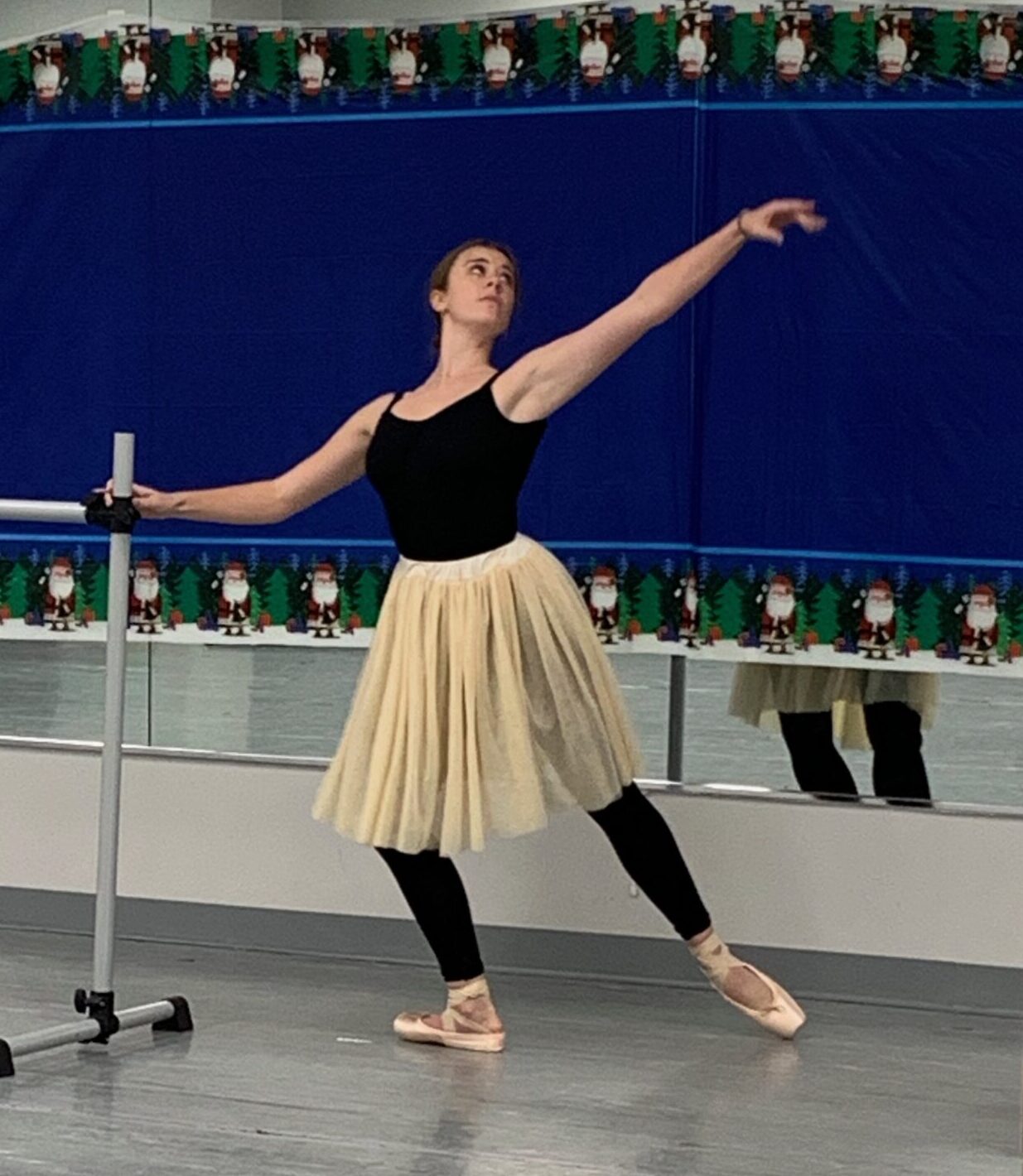 Virginia is a complex character, and the plot of the ballet gives a framework for her character development, so can you say a little bit to characterize Virginia from the outset? Who is Virginia when the audience meets her for the first time?
Emily: Initially Sandra is reading about her in a magazine, so she’s definitely a famous model. When Virginia comes to town, all the people are so excited that she is in their town, and Virginia soaks in all that attention. She knows how great she is, and she acts like it. In Mona Lisa when Virginia first arrives, there are several moments when I walk around the back of the stage and all the townspeople are just so excited. My character is all about the attention she receives for her modeling, because that is what she’s living for. She’s trying to be the best, and she’s trying to get that attention from others to reinforce how great she is.
Kaya: You mentioned the townspeople’s reactions, I always notice Katie’s faces. You can really see her, and she’s so expressive. She genuinely looks like a fangirl teenager.
Emily: The last time I rehearsed the piece, she waved at me, and I was not expecting it at all. I laughed, but I was so out of breath! I thought, I need to mentally prepare: she waves at me onstage, I can’t laugh– but it’s accurate, so it’s funny to be in that character and think, “I wonder if this is how people feel sometimes?” Because it feels so stupid; Virginia’s just a normal person, just like them, but they think she’s the biggest thing ever.
Kaya: That is part of what we’re doing with this show as comedy; you’re exaggerating, and it is funny. The audience will probably see it and think, “Is there a time when…” maybe they saw somebody famous and they’ll think, “I totally looked like that.” And that’s part of how it’ll raise the questions: are the things we’re looking for value in really that great? Are they worth that kind of a reaction?
You mentioned the Mona Lisa piece as the first time you dance as the “real” Virginia, as opposed to something in Sandra’s imagination. It’s an interesting musical selection because the lyrics point out the dissonance between Virginia’s facade of happiness and feeling fulfilled by her job, on the one hand, and on the other hand her internal loneliness or emptiness. This is before anything has really happened between Virginia and Gloria. Can you share about your performance choices in that piece and how your movement draws out the different layers of Virginia to interpret the tension expressed in the music?
Emily: In that piece I express the dance in a way that contrasts with the music. The music talks about how on the exterior everything looks great, but what’s inside? Nobody knows what’s actually going on. In that piece it’s the first time I come into town, so it’s like I’m saying, “Hi everyone! Thank you for all the attention!” I’m dancing with the photographer, and it’s like this big show. I portray it as just happy the whole time because often that is how people portray themselves: on the outside, everything’s fine, they have their life together, and they’re confident in where they find their identity. Deep down Virginia knows that her identity as a model is not lasting or deeply fulfilling, but in that dance she’s just taking in all the attention, thinking, “I don’t really care right now.”
Kaya: It makes sense because it’s a very public moment. You’ve just arrived on the train, and everybody’s watching, so you’re going to put on your best self–and there’s a level on which you believe in that self at that moment. I like what you said about the music, because if you think about the actual Mona Lisa painting, a lot of people talk about her enigmatic smile and how you don’t know what’s underneath the surface. By dancing in a happy way that says, “No, nothing’s wrong,” you intensify that tension and leave the audience wondering, “What’s going to happen with this character?”
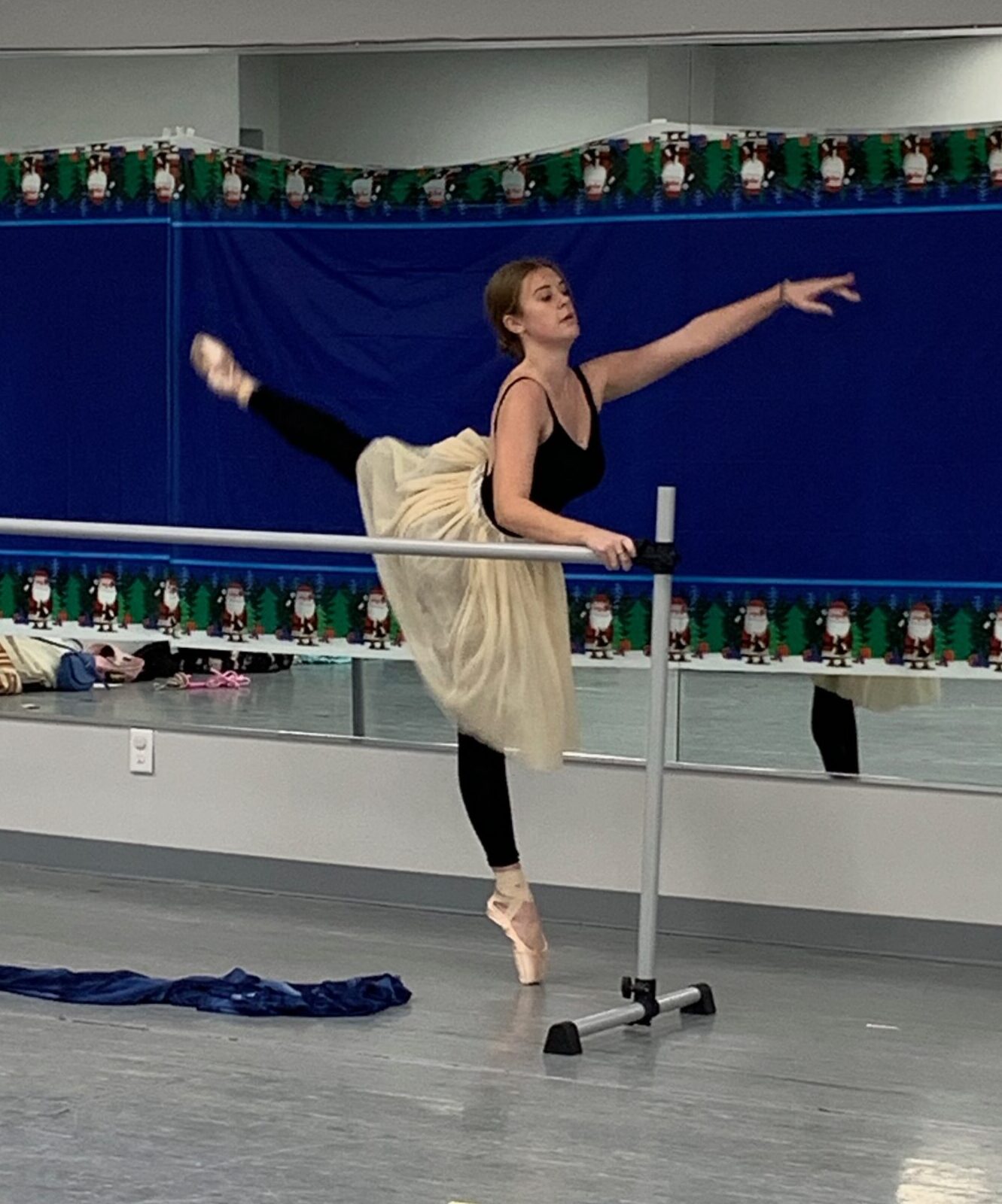 In the second act you have a dramatic solo where you cross the bridge and pass through the waters, and something changes after that. What brings about that change, and how is Virginia different in the finale because of that transformation?
Emily: I think of the dance right before that where Virginia’s standing on the bridge and she sees Jean with Sandra, right after Loretta tells Sandra that her outfit is ugly. That leaves Sandra really upset because she tried so hard to be this person, and now the models don’t even approve of that. In that dance Jean tells Sandra, “You are treasured in the eyes of the one who made you.” She tells her it doesn’t matter what people think of you on earth because all that matters is that God loves you, and in God’s eyes you’re treasured. You have value.
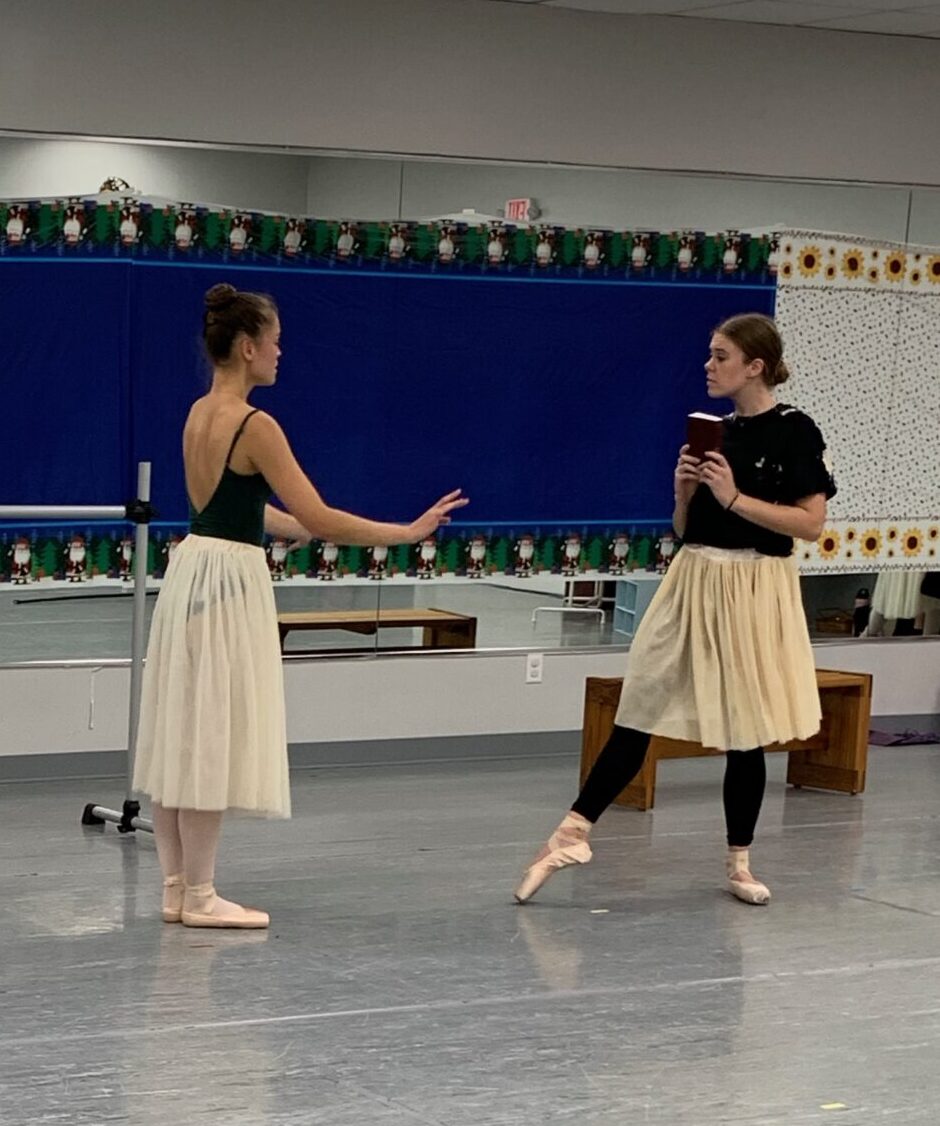 My character is standing on the bridge watching Jean tell Sandra this truth, and my character is going through a different dilemma because I got fired from modeling, so my character is in an identity crisis, wondering, “What am I going to do now?” But that same truth that Jean is telling Sandra applies to me in my situation. In the bridge solo, Virginia is trying to make that choice: do I want to go all in? Do I want to believe in God, change my life, and live for God instead of modeling? Or do I want to just continue living for modeling and see how that goes? Earlier Jean gives Virginia the Bible to read, so my character has had a taste of that, but by the bridge solo my character decides, this is it, I’m all in. Modeling is always going to disappoint, but there’s a God who sees, loves, and treasures me, who will never disappoint me.
That changes the way my character interacts with the other dancers because in the beginning my character is separate from all the townspeople–almost like a work of art in a museum. People can’t really touch me. But in the end I’m dancing with all of the townspeople, I’m friends with them, and I say bye to them at the end. There’s a shift from “I’m better than you” to “I’m one of you” because God sees us all the same.
Kaya: A lot of what you just shared reminds me of why I wanted us to study Ruth as part of this show. Can you share a bit about your interpretations of the Ruth passages that we’ve studied and how you’re applying that to your character?
Emily: We’ve talked a lot about whether I’m Ruth, Naomi, or a little bit of both. In the beginning, Naomi has this loss in her life, and for Naomi that’s her husband, but for my character it’s fashion and modeling. But in the end of Ruth there’s restoration because God blesses Naomi with a grandchild, and in the end of Label: Beauty Virginia is restored not through modeling but through realizing her true identity.
Ruth decides to leave her own people and go with Naomi. She says, “Your people will be my people, and your God my God.” My character does the same thing because she chooses to leave her world of modeling, and she chooses to go along with Jean. It’s kind of the same thing: “Jean, your God will be my God, and I’m choosing to now walk in this new way of life.”
Kaya: Yeah, and along with that, what you said earlier about going from being separate from the teenagers in the town to dancing with them, which is symbolized in the ensemble dancing in the finale that you’re part of, is similar to Ruth going with Naomi to Bethlehem and becoming part of the Israelite people and even being integrated into the genealogy of King David and the Messiah. On one level this is a fun, lighthearted ballet, but when you make that connection with Ruth there is a level on which becoming part of a people who knows God looks like part of the grand story of God’s design for humanity’s redemption. It’s a small story that’s part of a really big story.
Shifting gears a little, do you relate to Virginia at all through your own personal experience?
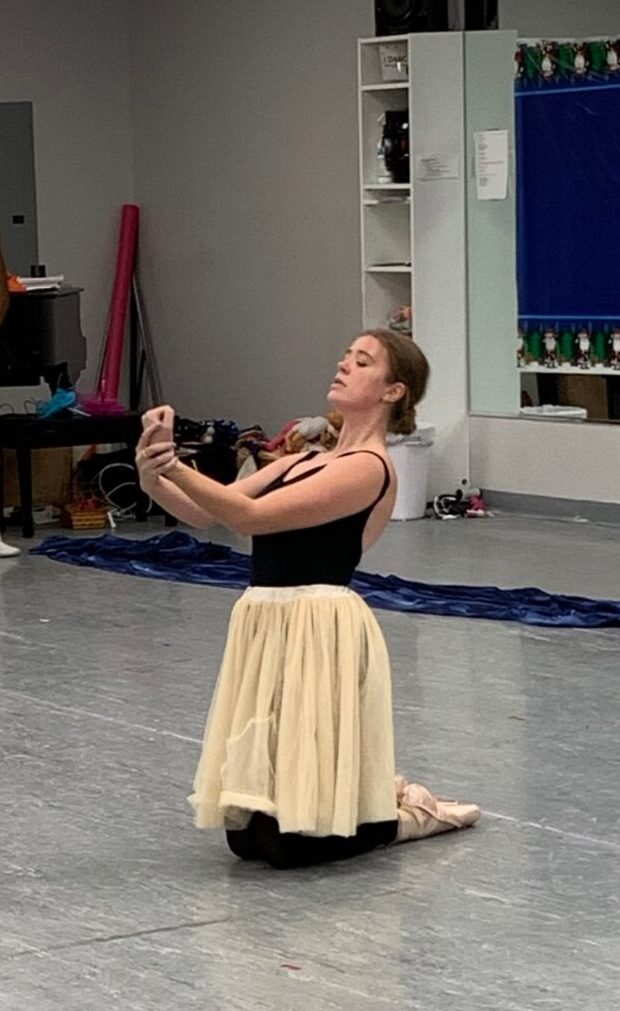 Emily: I do, definitely. That’s a big part of my testimony. I became a Christian when I was really young and grew up going to church, but ballet was a huge idol for me while growing up. In a lot of ways I was making ballet my identity, so I can completely relate to Virginia because I felt like I was living for ballet and doing everything to try to be the best. I modeled my whole life around, “How can I be the best dancer? How can I excel in this?” instead of living for God and doing what God wanted me to do. There was a moment in high school–it was actually with Melody when I did a show with her–and we were doing a ballet, and I realized that dance is a gift that has been given to me by God, so it’s something I should use to glorify God. It shouldn’t be what I’m living for, but I should sacrifice it to God and ask, “God, how do you want me to use this gift that you’ve given to me?”
That was a really powerful shift, almost like my “bridge” moment, where I surrendered dance to the Lord and said, “I want my whole life to be lived for you. Dance isn’t my life; you are my life. Dance can be part of that, or if you want me to give it up, I’ll give it up.” That’s kind of interesting thinking about the story because we don’t know whether Virginia continues modeling. She could continue doing that; now she knows her true identity, so when things happen in modeling it won’t be devastating because she knows who she really is–or she could just end her whole modeling career, and that’s fine too. But for me, I surrendered dance to God and then God gave it back to me as a gift, like saying, “Now I want you to use this for me.”
Kaya: That’s beautiful. It almost doesn’t matter if Virginia goes back to modeling because either way, God is with her and she finds herself in God. But in your story, you’re finding yourself in God, in dance.
What kind of reflection do you hope Virginia’s character and redemption arc will inspire in the audience when they see the show?
Emily: I think every single person can relate to Virginia. We all have idols in our lives; it just looks different for every person, and there’s always going to be something that we’re tempted to put in place of God, even as Christians. I hope that every audience member can connect with Virginia and identify the thing in their life that they’re living for, that they’re finding their identity in, and surrender it to the Lord and realize that God truly treasures and loves them and that that is where their identity comes from. Everything on this earth will fade or change, but God is the same yesterday, today, and forever. God will never change, and our identity in God will never change.
Kaya: What a beautiful conclusion. Coming from you that message is going to be really powerful, especially with your story with dance and seeing that surrendering to God doesn’t mean losing everything that we know that’s beautiful, but when we let God give it to us and we receive it as a gift from God, the beauty and freedom of it multiplies.
That covers my questions, but is there anything else you want to say to our audience?
Emily: Come see the show this weekend!!
Emily is a first soloist with Glorify Dance Theatre. Get to know her more by reading her bio.

